


Automobiles have become more than transportation; they're symbols of innovation, engineering and cultural identity. Among the world's automakers, German brands stand out for their craftsmanship, advanced technology and meticulous attention to detail. Here's a look at what sets German vehicles apart from their North American and Japanese counterparts.
The Pursuit of Perfection
Germany's automotive story begins with a handful of pioneers. In 1876, Nicolaus Otto developed the four-stroke internal combustion engine, and on January 29, 1886, Karl Benz received a patent for his Benz Patent-Motorwagen, widely regarded as the first modern automobile. That same year, Gottlieb Daimler and Wilhelm Maybach fitted their engine to a carriage. By the early 1900s, Germany had a growing auto industry, and in 1926 the companies founded by Benz and Daimler merged to form Daimler-Benz, which began building cars under the now-famous Mercedes-Benz name. BMW, another familiar name, was founded in 1916 and began building automobiles in 1928.
The Great Depression of the early 1930s hit Germany's auto industry hard. Dozens of carmakers that had flourished in the 1920s disappeared, and only a handful survived. Several of those survivors grew into global leaders after World War II, developing cutting-edge technology that strengthened the German economy and set new standards for the entire industry.
What Are the Major German Car Brands?

Germany is home to an impressive array of world-renowned car brands. Mercedes-Benz leads the way, recognized for its luxury, innovation and performance. BMW is known for sporty style and an engaging drive. Volkswagen, famous for the iconic Beetle, has won the hearts of drivers worldwide. Audi is known for sleek designs and advanced technology, and Porsche is synonymous with high-performance sports cars. Together, these brands reflect the nation's commitment to excellence, engineering and a long tradition of building some of the finest automobiles in the world.
What Makes German Automotive Engineering Unique?
German automakers such as Mercedes-Benz, BMW, Audi and Volkswagen have earned a reputation for high-quality, innovative and performance-oriented vehicles for several reasons:
Emphasis on Precision Engineering

Precision engineering is the hallmark of German automakers. From the first design sketch to final assembly, every step is executed with meticulous attention to detail, resulting in superior build quality and performance. Mercedes-AMG's "one man, one engine" philosophy, in which a single technician hand-assembles each AMG engine, is a perfect example of this dedication. Learn more in Mercedes-AMG Decoded.
Focus on Performance and Handling

German automakers invest heavily in chassis, suspension and drivetrain development to strike a balance between agility and stability. Whether on the Autobahn or a winding country road, German cars are engineered to respond with precision and confidence, an approach that has made performance and driving pleasure central to their identity. Mercedes-Benz's racing history plays a big part; read The Racing Heritage of Mercedes-Benz.
Safety Innovation
Mercedes-Benz in particular has pioneered many safety features that are now industry standards, including the crumple zone, first used in production in 1959; anti-lock brakes, introduced in the S-Class in 1978; and the driver airbag, introduced in 1981. That safety-first engineering continues in today's driver-assistance technology.
Premium Interior Design and Materials
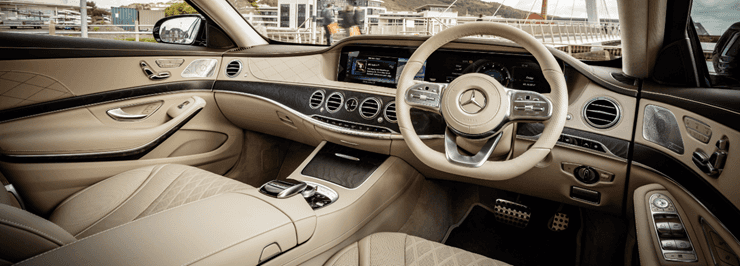
German automakers are known for interiors crafted with care and high-quality materials. From supple leather to elegantly designed dashboards, every surface and control reflects craftsmanship and precision, complemented by intuitive infotainment and advanced driver-assistance features. The result is a cabin that makes every journey feel special.
How Does German Automaking Compare With North American and Japanese Automaking?

Each region's automakers have distinctive identities shaped by their history. German brands combine a luxurious heritage with engineering excellence, often prioritizing a sporty, dynamic driving experience and a seamless blend of tradition and innovation. Examples include the Mercedes-Maybach S-Class, the BMW Z4 Roadster and the Audi RS 5.
North American brands proudly highlight their roots, offering a blend of comfort, size and boldness. American vehicles tend toward muscular designs with a rugged, robust appeal, as in the Ram 1500, Dodge Challenger and Jeep Wrangler, which reflect the adventurous spirit of the land they come from.
Japanese automakers are renowned for reliability, fuel efficiency and innovative technology. Their vehicles often prioritize practicality and function while still delivering a comfortable drive, with clean, modern design. The Toyota Prius, Honda Civic and Nissan Altima are well-known examples that have shaped the global automotive landscape.
Setting the Bar

German vehicles stand out for their precision engineering, performance focus, safety innovation, premium interiors and long-term quality. North American and Japanese cars each have their own strengths, but German vehicles continue to win over enthusiasts and luxury buyers worldwide. If you'd like to experience German engineering for yourself, visit Mercedes-Benz of Fresno, where our team can help you find the right sedan, coupe or SUV.
Keep Reading
Experience German Engineering
Explore the Mercedes-Benz lineup at 7055 N Palm Ave or call Sales at (559) 254-4585.